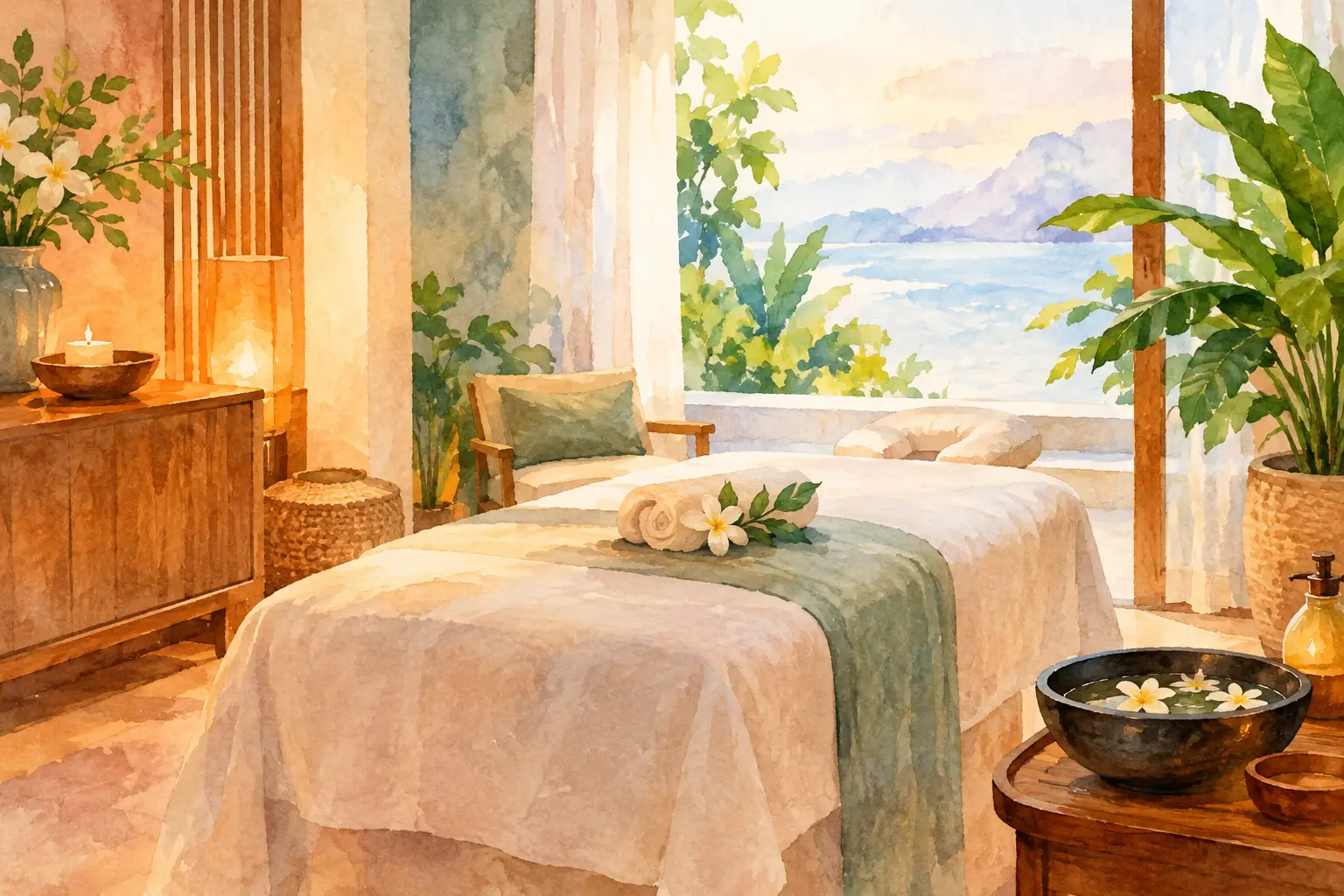
A spa can look immaculate and still feel unsettled. Often, the missing element is not another candle or a stronger fragrance. It is the air between sounds. These spa soundscape examples are built for that space: music with enough character to hold a room, and enough restraint to leave the treatment, the conversation, and the guest’s own thoughts undisturbed.
I compose for environments where nobody should have to reach for the volume control every ten minutes. The best choice depends on the room, the time of day, and whether the listener is face-down on a massage table or arriving from a busy street. What matters most is continuity: stable loudness, patient pacing, and arrangements that do not ask for attention.
What Makes a Spa Soundscape Work?
A spa soundscape is more than a playlist with soft piano. It is a considered layer of the guest experience. The music should make the room feel intentional from the first moment, without becoming the event.
For treatment spaces, that usually means minimal or absent vocals, gentle transitions, and a tempo that does not create urgency. Low frequencies should feel warm rather than heavy. High details can add air – a distant bell, soft rain-like texture, a breath of synth – but sharp or repetitive sounds may become tiring during a long appointment.
Consistency is practical, not merely aesthetic. A therapist needs to focus on the client, not on skipped tracks, surprise crescendos, or one song arriving noticeably louder than the rest. A reception area needs a different energy from a quiet treatment room, but it needs the same dependable flow.
7 Spa Soundscape Examples for Different Rooms
1. Weightless ambient for a massage room
This is the most spacious version of spa music: slow-moving pads, soft harmonic movement, and a low end that sits beneath the body rather than pressing against it. Think of it as music that removes edges from the room.
It works especially well for Swedish massage, restorative bodywork, and any appointment where silence is part of the service. Keep the volume low enough that the therapist can speak naturally without raising their voice. If a client notices every musical detail, the sound is probably too present.
Long-form instrumental sequencing matters here. A 60- or 90-minute treatment should not be divided by obvious endings or a sudden change in mood. The music needs to travel slowly, like light shifting across a wall.
2. Warm piano and soft strings for a facial suite
Facial rooms often benefit from a little more melodic tenderness. A simple piano phrase, softened by sustained strings or ambient textures, can feel personal without becoming sentimental. The key is repetition with variation: familiar enough to settle into, but not so repetitive that it starts counting time.
Avoid bright solo piano recordings with hard key attacks. In a small room, those transients can feel surprisingly close. Choose arrangements where the piano is cushioned and the silences are allowed to remain open.
This soundscape also suits quieter beauty appointments, especially when the service itself has a careful, detail-oriented pace.
3. Nature-textured ambient for a hydrotherapy area
Water changes how music is heard. In hydrotherapy rooms, wet areas, and relaxation spaces with fountains or rainfall features, a dry, overly detailed track can compete with the environment. Ambient music with gentle field-texture qualities tends to sit more naturally beside moving water.
That does not mean filling the room with loud ocean waves or bird calls. Literal nature sounds can become theatrical, and short recorded loops reveal themselves quickly. Instead, choose music with a soft sense of weather: filtered air, distant shimmer, slow tonal movement, and a rhythm that is felt more than counted.
The result should support the room’s natural acoustics rather than trying to replace them.
4. Golden-hour lounge for reception and retail
The welcome area has a different job. Guests are arriving, checking in, choosing products, or waiting for a companion. Total stillness can feel awkward, while deep-sleep ambient may flatten the room too much. This is where refined lounge music earns its place.
A relaxed beat, warm bass, muted guitar, or understated melodic house pulse can bring gentle motion without turning the reception desk into a bar. The atmosphere should feel polished, social, and unhurried – like late afternoon light across a calm hotel terrace.
For this setting, use a slightly higher volume than in a treatment room, but keep the dynamic range controlled. Guests should feel welcomed before they consciously register the music.
5. Breath-led minimalism for meditation or yoga spaces
A movement studio needs enough time in the music for breath, instruction, and stillness. Sparse ambient works well during meditation, sound baths, and slow floor-based classes because it leaves room for a teacher’s voice. During yoga, the ideal level of pulse depends on the practice.
For yin or restorative sessions, choose nearly beatless tracks with long harmonic tones. For gentle flow, a soft, unhurried electronic rhythm can help carry transitions. The trade-off is simple: more rhythm creates momentum, but too much rhythm can turn inward attention into performance.
Avoid dramatic drops, vocal hooks, and tracks with a pronounced final resolution. A class should be able to settle without the music announcing that something has ended.
6. Deep night ambient for post-treatment rest
Some spas offer a quiet lounge where guests can sit with tea after a treatment. Others have evening appointments when the building itself becomes calmer. This calls for music that is darker in color, not darker in mood.
Deep night ambient may use lower registers, slower harmonic changes, and fewer bright elements. It gives the room a sense of privacy. There is no need to make it sad or overly serious. The best versions feel like a dimly lit corridor after rain: calm, spacious, and quietly alive.
This is also a strong choice for the final hour of operations, when the sound of the day should gradually recede rather than switch off abruptly.
7. Soft melodic chillout for a spa café or terrace
A café, outdoor terrace, or social lounge can carry more melodic color than a treatment room. Guests are speaking, eating, and moving through the space. Gentle chillout with a relaxed groove keeps the atmosphere lifted without making it busy.
Choose tracks with rounded drums, warm bass, and vocals used sparingly, if at all. A lyric can pull attention away from a conversation or change the emotional tone of the room too quickly. Instrumental music is usually the safer foundation when guests are coming and going throughout the day.
This is where a soundscape can feel quietly contemporary. It should suggest taste without demanding agreement from everyone in the room.
How to Build a Better Day-Long Flow
One playlist rarely fits every zone. If your spa uses the same music everywhere, create a sequence that follows the guest journey: a little more movement at arrival, deeper spaciousness in treatment rooms, and soft warmth in the lounge afterward.
Before committing to a soundscape, test it during actual service hours. Listen from the guest chair, the treatment table, the hallway, and the reception desk. Air conditioning, plumbing, conversation, and room surfaces all change what the music becomes.
Check four practical details: whether the loudness stays even, whether transitions feel natural, whether the music remains comfortable after an hour, and whether staff can leave it alone. The last point is often the most revealing. Great background music does its work without creating another task.
At Locuorio, I build extended instrumental programming around that principle: warm low end, restrained dynamics, and room to breathe. For massage and deep-rest environments, the Weightless Suite is designed to move patiently through a full session rather than treating every track as a fresh start.
A thoughtful spa soundscape does not need to be noticed to be felt. Choose music that holds the room gently, then let the room do the rest. When you are ready, listen to the Weightless Suite and follow Locuorio on Spotify for more long-form atmosphere.